
I’m Dr. Reanna Plancich, a NUCCA chiropractor in the U-District. Every September I see the same pattern: the first real rains after a dry summer, work and school traffic stacking up, and people walking in after a “small” fender-bender that did not feel small to their neck.
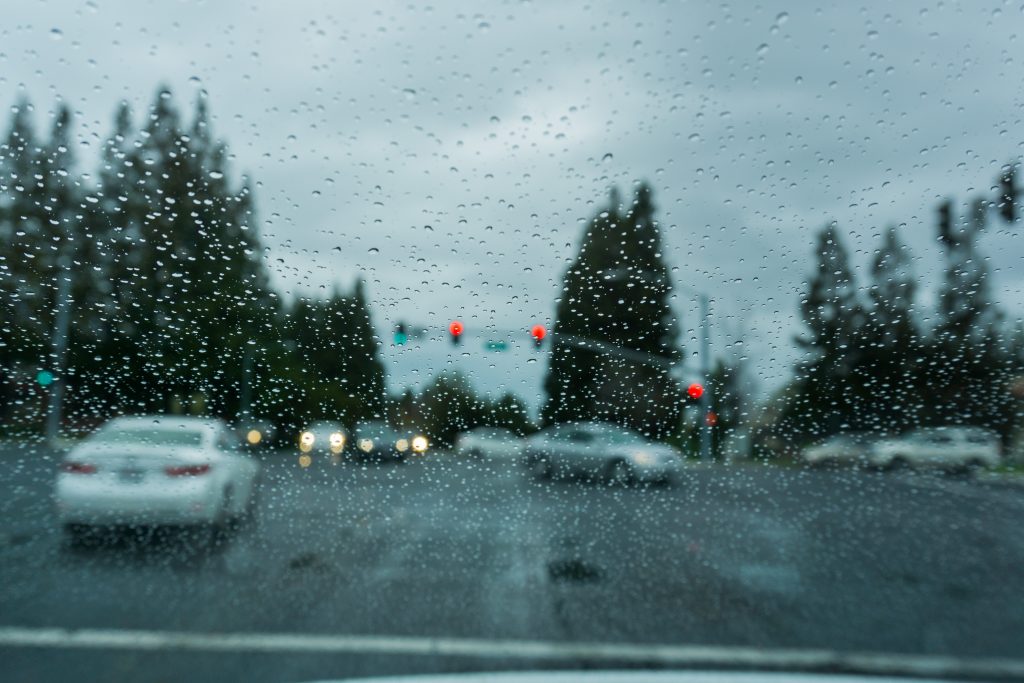
Why the first rains are the slickest
Oil, rubber, and dust sit on the pavement all summer. The first storms of fall lift that film and mix it with water. Tires lose grip before drivers reset their habits. AAA testing found that at highway speeds on wet roads, worn tires can add about 43 percent to stopping distance – roughly 87 extra feet compared with new tires. That is a full car length you no longer have on I-5.
Then volume returns. Offices fill. Kids go back to school. More cars, more merges, more sudden stops.

Where Seattle crashes actually happen
City data keep pointing to the same corridors. Serious injuries cluster on a handful of high-volume streets: Aurora Avenue North, Rainier Avenue South, and busy connectors like Denny Way and the Mercer ramps onto I-5. I-5 itself, the Ship Canal Bridge, and West Seattle Bridge access points stack speed, short merges, and wet pavement. On King County roads in 2024, almost two-thirds of crashes were a fixed-object hit, an angle crash at an intersection, or a rear-end – the three patterns rain makes worse.
These are not random. They are arterials with turning conflicts, tight gaps, and people walking.
How to lower your odds
Double your following distance in the first rains. Slow down before the hill, the merge, and the light – not after the tires slip. Replace tires that are close to the wear bars. Leave earlier. Assume the car in front will brake.
What whiplash actually does
In a rear-end or sudden stop, the seat holds your torso. Your head keeps moving. That snap is whiplash.
The atlas (C1) sits under the skull with almost no interlocking joints. They depend on ligaments – especially the transverse ligament and the paired alar ligaments – and on the small suboccipital muscles. A crash can stretch or partially tear those ligaments. Tendons and muscles fire to guard the joint.
Healing then follows a slow clock. Inflammation lasts days. New collagen is laid down over the next several weeks. Remodeling runs for months. Early collagen is weak and disorganized. It organizes along the lines of stress the joint is under while it heals.
That is the key point. Tissue heals in the position it is loaded. If C1 is sitting off-center while that scar forms, the new fibers organize around a crooked foundation. The joint stays guarded. Headaches, neck tightness, dizziness, and jaw tension can linger long after the bumper is fixed.
Pain fading is not the same as tissue being ready. At the scene, stress hormones can blunt pain. Stiffness and headaches commonly show up on day two or three.
Why upper neck alignment matters during healing
Gentle NUCCA care does not make collagen grow faster. It changes the environment the tissue heals in.
Specific upper cervical X-rays show how the atlas is sitting – not just whether a bone is broken. A precise, low-force correction encourages the skull, C1, C2 and the rest of the spine back toward a more balanced position. No twisting. No cracking. When the head sits more evenly, ligaments are not stretched on a tilt, and the guarding muscles have a reason to stand down while remodeling continues.
If the fall or crash was yesterday, get cleared first. Severe pain, numbness, weakness, or a change in coordination belongs in the ER. After you are medically cleared, we can look at whether the upper neck is sitting in a position that will let those damaged tissues heal straighter.
Call (206) 577-3588 We’re at 4345 Roosevelt Way NE.