
Hello Seattleites! These days, the light rail isn’t the only thing moving fast. With Summer in full swing, the World Cup in town, and the Knicks winning the big game, people are booked and busy trying to balance their work and social life. Because of this, it’s important to learn to support our body’s built-in relaxation systems in our fast-paced lives. A supported system can be one of the most powerful steps toward a more natural, holistic lifestyle. One of the key players in this is the vagus nerve, often called the “wandering nerve” because of its extensive reach throughout your body.
What Is the Vagus Nerve?
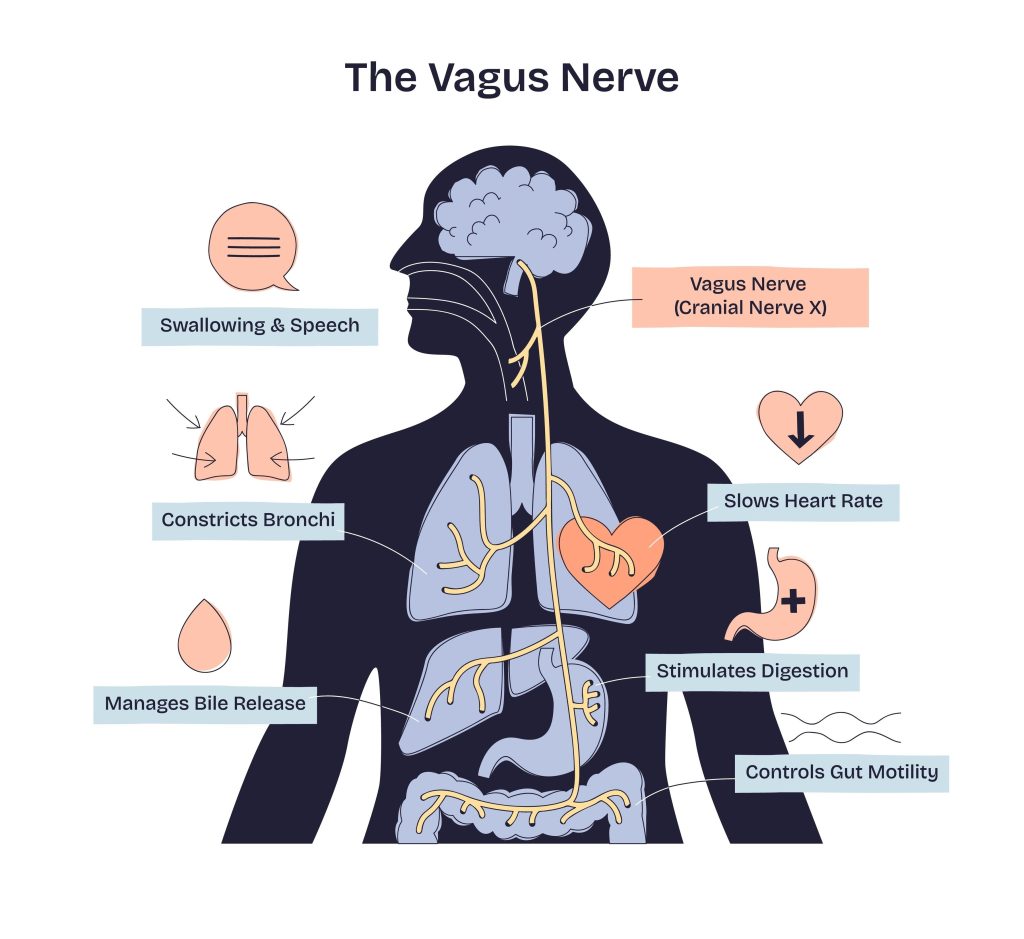
The vagus nerve is the longest cranial nerve in your body; it originates in the brainstem and travels down through the neck, chest, and into the abdomen. It also branches out and connects to major organs including the heart, lungs, and digestive tract. Subsequently, it not only plays a major part in control of digestion but also immune response, control of mood, and heart rate as they are all part of the parasympathetic system. As the primary component of your parasympathetic nervous system (the “rest and digest” system), it counterbalances the sympathetic “fight or flight” response.
How the Vagus Nerve Affects Your Body and Health
This remarkable nerve influences a wide range of vital functions ranging from the physical to mental well-being:
- Heart rate, blood pressure, and breathing: It helps slow your heart rate and promote calm breathing.
- Digestion: It stimulates stomach acid production, digestive enzymes, and gut motility for better nutrient absorption.
- Inflammation and immunity: It plays a key role in regulating the body’s inflammatory response, helping reduce chronic inflammation.
- Mood and mental health: By communicating with the brain, it supports emotional balance, resilience to stress, and feelings of well-being.
- Overall recovery and rest: Higher “vagal tone” (how well the nerve functions) is linked to better sleep, lower stress, improved heart rate variability, and faster recovery from daily stressors.
When the vagus nerve is functioning optimally, you feel more grounded, digest food better, handle stress more effectively, and experience greater overall vitality — core elements of holistic living.
Simple Ways to Support Your Vagus Nerve Naturally
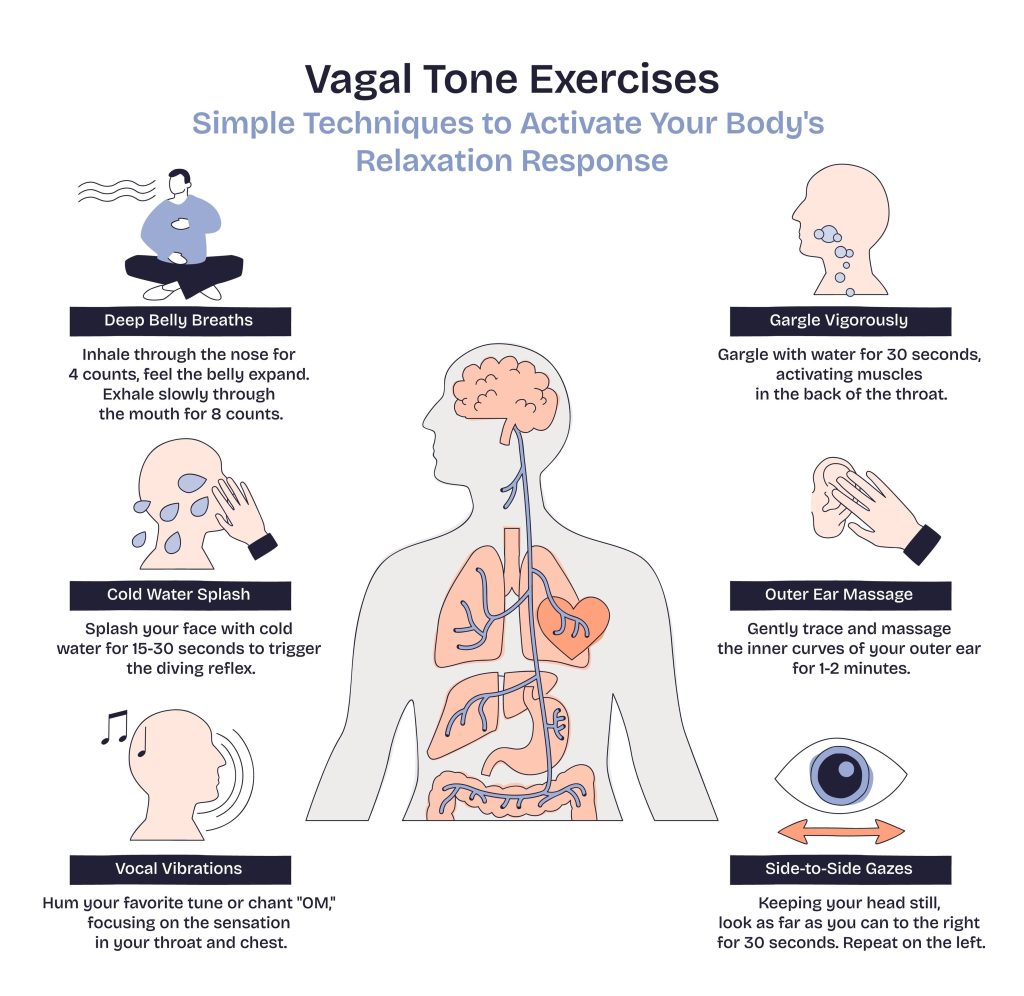
You can strengthen vagal tone every day with gentle habits:
- Practice deep, slow breathing or box breathing (inhale 4 counts, hold 4, exhale 4, hold 4).
- Try humming, singing, or gargling to activate the nerve through the throat.
- End showers with 30 seconds of cold water.
- Spend time in nature, walk mindfully, or engage in gentle movement like yoga.
- Prioritize social connection and gratitude practices.
These small actions shift your body toward rest-and-digest mode, making them a wonderful complement to holistic lifestyle practices.
The NUCCA Connection: Supporting Nervous System Balance
At the heart of optimal vagus nerve function is a healthy, aligned nervous system. The vagus nerve originates near the upper cervical spine (brainstem area). This means that even subtle misalignments in the atlas (C1) vertebra can create tension or interference that affects its signaling.
Through the use of detailed imaging and measurements to restore alignment, NUCCA offers a precise and gentle approach to correcting upper cervical misalignments. It can help reduce nervous system stress, improve communication along pathways like the vagus nerve, and supports your body’s natural ability to heal and regulate itself. As a result, many patients notice benefits such as reduced tension, better stress resilience, improved digestion, fewer headaches, and an overall sense of calm.
If you’re looking to enhance your natural health, or support your vagus nerve and entire nervous system, we’re here to help. Reach out at (206) 577-3588 or visit our site to schedule a consultation with me. Together, we can help you build lasting balance and wellness right here in the University District.