

For many people in Seattle, driving is a daily necessity. Whether it’s commuting to work, running errands, or heading out for a weekend trip, time spent in the car can quickly add up. It makes sense then that in anticipation of the long hours spent in their vehicle, most drivers prioritize their comfort when adjusting their seat and mirrors. However, few realize how important proper driving ergonomics are for protecting the alignment of the neck and spine—especially the upper cervical area.
The upper neck plays a major role in posture, balance, and communication between the brain and body. When driving posture is poor, it can place unnecessary strain on the neck muscles and joints. Over time, this strain may contribute to stiffness, headaches, and fatigue.
Setting Up Your Seat for Better Neck Alignment
Proper seat positioning is one of the best ways to reduce stress on your neck while driving.
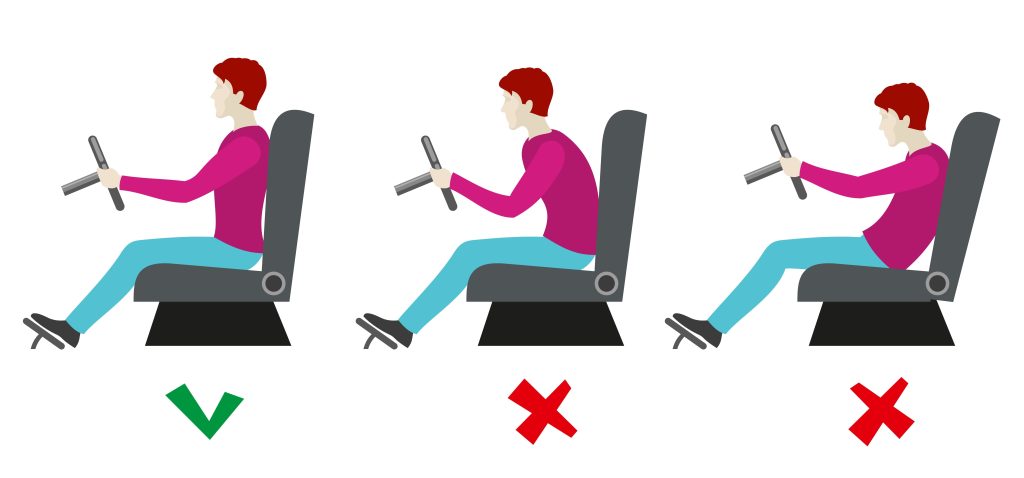
Start by adjusting the seat so that your hips sit all the way back against the seatback. Your knees should be slightly lower than your hips, and you should be able to comfortably reach the pedals without locking your legs. Sitting too far forward or too far back can change your spinal posture and increase tension in the neck and shoulders.
The seatback should have a slight recline of about 100–110 degrees; this helps support the natural curves of the spine and prevents the head from being pushed forward.
Your headrest is also important. The center of the headrest should line up with the middle of the back of your head. Ideally, it should sit just a couple of inches behind your head. This positioning helps support the neck and can reduce excessive movement during sudden stops or impacts.
Mirror Positioning Matters More Than You Think
Proper mirror placement can also help maintain better neck alignment.
Instead of relying on large head turns to check your surroundings, position your side mirrors so you only need minimal head movement. Lean slightly toward the window when adjusting the driver-side mirror and slightly toward the center of the car when adjusting the passenger mirror. This technique widens your field of view and reduces blind spots.
When mirrors are adjusted correctly, drivers are less likely to twist or strain their neck repeatedly during normal driving.
If a Car Collision Occurs
Even with perfect driving ergonomics, car accidents can still happen. During a motor vehicle collision, the body can experience sudden acceleration and deceleration forces which often results in whiplash and other cervical spinal injuries.
In many cases, symptoms such as neck pain, headaches, dizziness, or stiffness may not appear immediately after the accident. Soft tissues, ligaments, and muscles can take hours or even days to show signs of injury.
Because of this delayed response, it’s important to have your spine evaluated after a collision—even if you initially feel fine.
Supporting Healing After an Accident
Upper neck focused treatments, such as NUCCA (National Upper Cervical Chiropractic Association), can play an important role during motor vehicle collision recovery. NUCCA doctors use detailed imaging and precise measurements to evaluate the alignment of the upper cervical spine.
Gentle and highly specific adjustments aim to restore proper alignment so the nervous system can function efficiently while injured tissues heal. When spinal alignment improves, the body may be better able to reduce inflammation, restore balance, and recover from trauma.
If you’ve recently been involved in a car accident in Seattle, set up an appointment with Dr. Reanna Plancich NUCCA Chiropractor! Addressing the alignment of the upper neck can be an important step in supporting long-term healing and helping you return to your normal daily activities.