

Sleep is one of the most important times for your body to rest, repair, and recover. But if your neck is not properly supported while you sleep, those 6–8 hours can place unnecessary stress on your spine and nervous system. Poor sleep posture can contribute to neck pain, headaches, stiffness, and even dizziness. By maintaining proper neck alignment during sleep and addressing structural issues in the upper neck, you can help your body heal better and stay healed.
One approach many people in Seattle explore for improving spinal alignment is NUCCA care. NUCCA focuses on the precise alignment of the upper cervical spine—particularly the atlas vertebra at the top of the neck. When the atlas is misaligned, it can shift the balance of the head and neck, placing stress on muscles, joints, and the nervous system. Gentle NUCCA adjustments aim to restore alignment so the head sits more naturally over the spine, which can make it easier to maintain good posture during both the day and night.
Side Sleeping: Supporting the Neck Properly
Side sleeping is often considered one of the best positions for maintaining spinal alignment—if done correctly. The key is keeping your neck straight and neutral rather than bending up or down, or too far to the left or right.
Your pillow should fill the space between your shoulder and your head. Since shoulder width varies from person to person, pillow height should match your shoulder height so that your neck stays level with your spine. If the pillow is too thin, your head will tilt downward toward the mattress. If it is too thick, your head will tilt upward. Either situation can strain the neck throughout the night.
A supportive pillow that keeps the head in line with the rest of the spine helps reduce tension in the neck muscles and supports better alignment while you sleep.
Why Stomach Sleeping Is Hard on the Neck
Sleeping on your stomach can be particularly stressful for the cervical spine. In this position, it is impossible to breathe without turning your head to one side. That means your neck remains rotated for hours at a time.
This prolonged rotation places uneven pressure on the joints and muscles of the neck. Over time, stomach sleeping can contribute to stiffness, muscle imbalance, and increased stress on the upper cervical spine. For people dealing with neck pain or headaches, avoiding stomach sleeping can make a noticeable difference.
Avoid Sleeping in Cervical Flexion
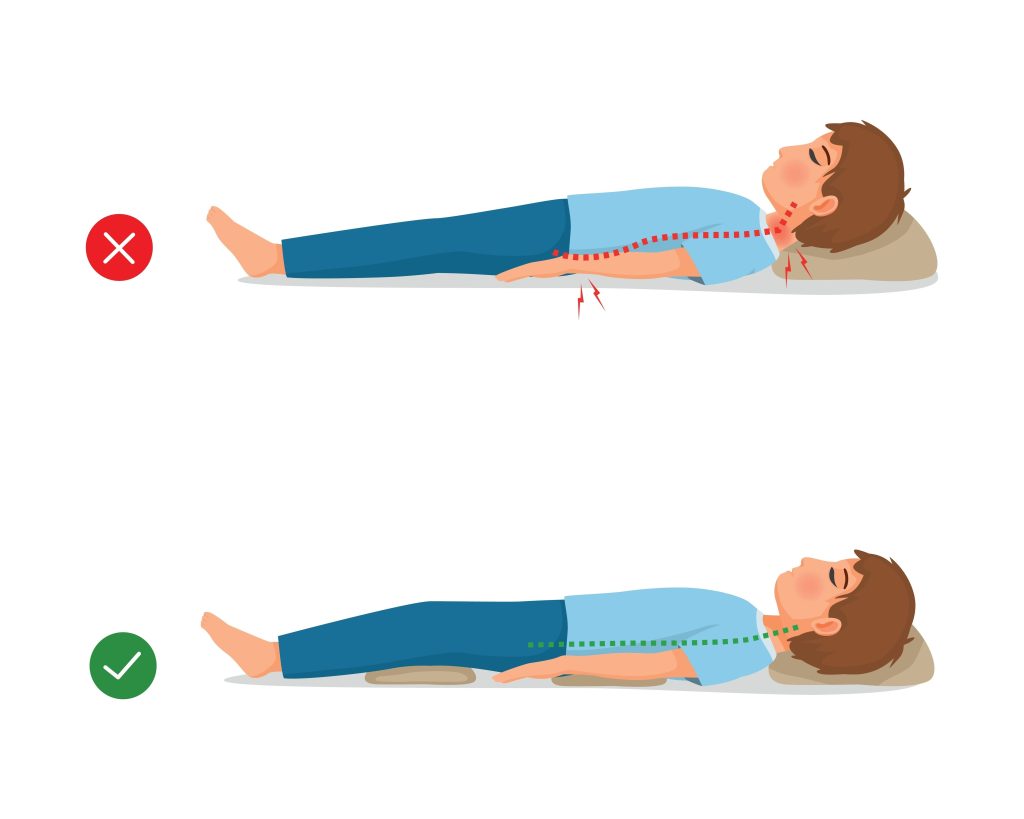
Another common issue is sleeping with the neck bent forward, known as cervical flexion. This often happens when pillows are stacked too high or when someone falls asleep sitting upright. When the chin drops toward the chest, the natural curve of the neck is lost and the muscles and ligaments are placed under strain.
Maintaining a neutral neck position allows the spine to rest in its natural curve and reduces stress on surrounding tissues.
Supporting Alignment Day and Night
When the upper neck is properly aligned through NUCCA care and supported with good sleep posture, the body has a better opportunity to relax and recover overnight. For many people in Seattle, combining precise upper cervical alignment with proper sleep positioning can be an important part of maintaining long-term spinal health.